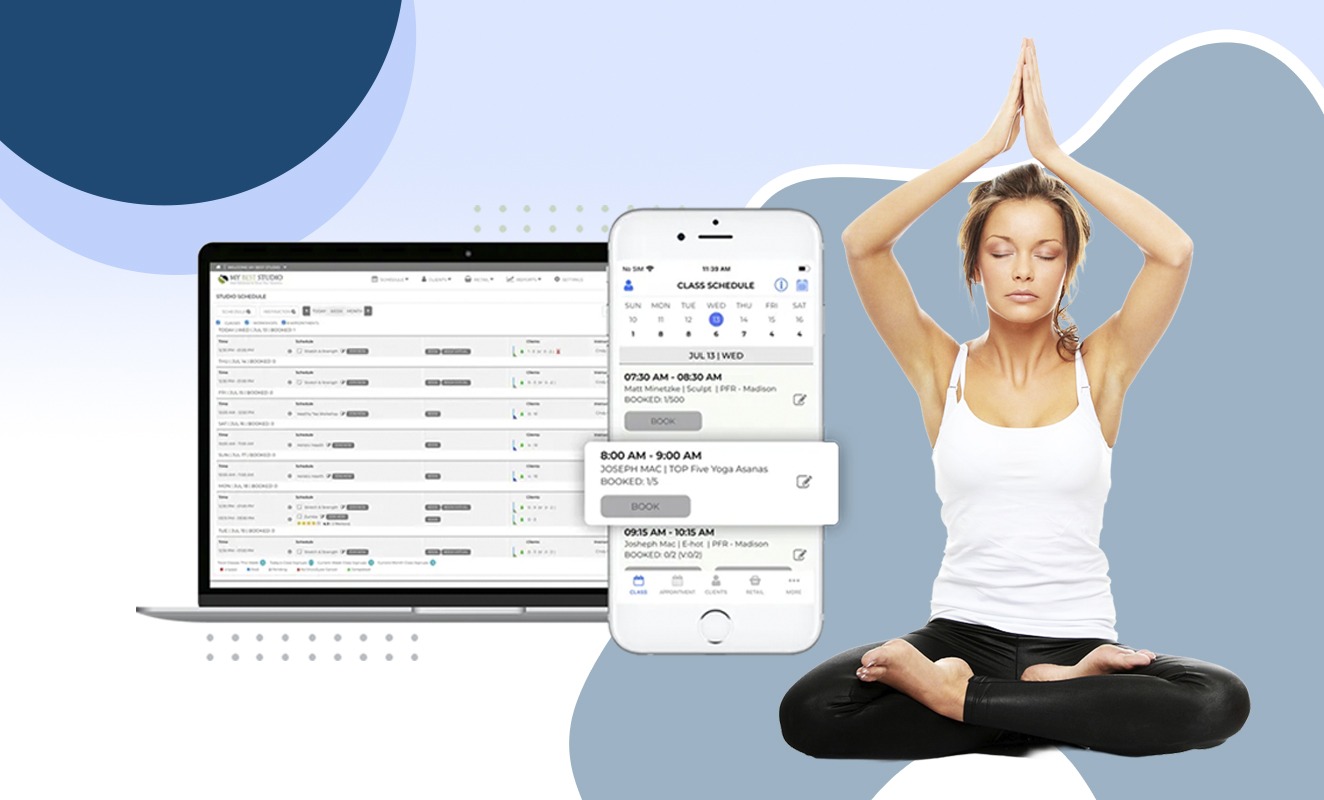
This guide covers the nine essential features every yoga studio booking software should include: custom-branded mobile apps, recurring class scheduling, automated cancellation policies, family memberships, smart waitlists, mobile-first booking experiences, integrated payment processing, class capacity controls, and email and SMS automation.
________________________________________
Choosing software is about finding a system that makes running your studio easier for you, your instructors, and the clients. Running a yoga studio means wearing more hats than most people realize.
You’re teaching classes, welcoming new members, answering emails, managing instructors, processing payments, promoting workshops, and somehow finding time to plan next month’s schedule. Somewhere between all of that, your booking software is supposed to make life easier.
Unfortunately, some studio owners end up investing in multiple tools. They pay hundreds of dollars every month for software packed with features they’ll never use. Others have built their own system using spreadsheets, Calendly, Stripe, and email tools. It works until something breaks. Using multiple tools can lead to double bookings, missed payment reminders, or lost revenue due to lack of timely communications.
Choosing the right booking software is becoming even more important as yoga continues to grow across the United States. CDC’s National Center for Health Statistics reports that 16.9% of U.S. adults practiced yoga in 2022, with participation reaching 23.3% among women. More people are attending classes than ever before, and they expect booking a class to be as simple as ordering coffee or reserving a restaurant table.
Today’s members expect to discover your studio online, book in seconds, receive reminders automatically, and manage their memberships from their phones. If your software makes any of those steps difficult, you’re creating friction before members even step onto the mat.
The good news?
You don’t need software with hundreds of features.
You need software with the right features.
1. A Custom-Branded Client App
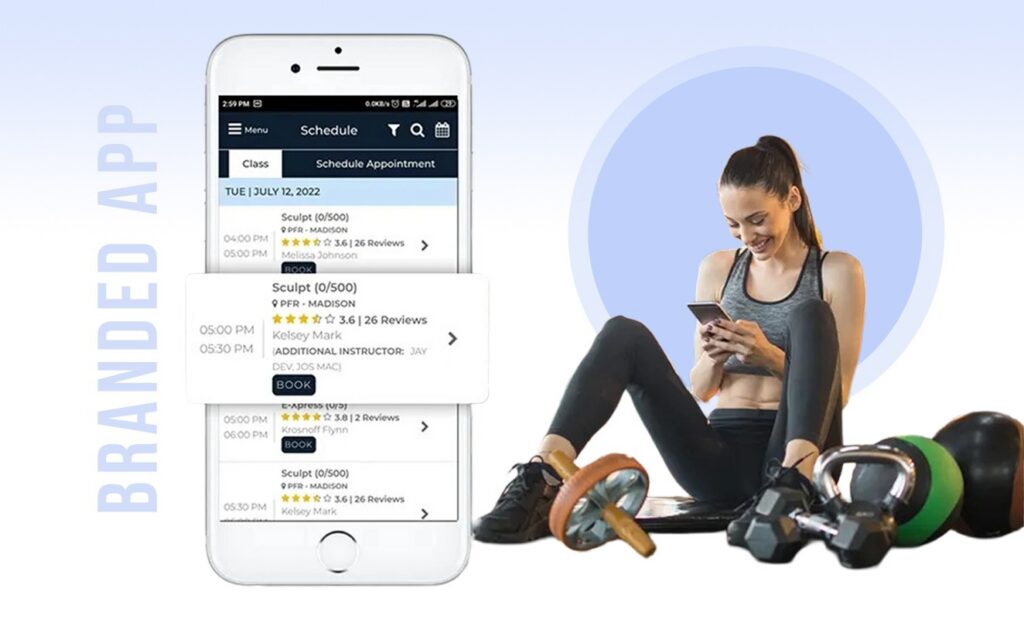
Your members shouldn’t have to download someone else’s app to book your classes.
A custom-branded mobile app puts your studio’s name, logo, and branding in the Apple App Store and Google Play. Members search for your studio, download your app, and instantly feel like they’re interacting with your business, not a marketplace full of competitors.
When someone opens an app with your studio’s branding, they’re reminded why they chose you. They can book classes, buy packages, renew memberships, and receive updates without navigating through another company’s interface.
For studio owners, it creates more professional experience while strengthening your brand every time a member books.
2. Recurring Class Scheduling
Most yoga studios run a predictable timetable.
For example: Monday evening Vinyasa.
Wednesday morning Yin.
Saturday Power Flow.
The schedule changes occasionally, but not every week. Your booking software should reflect that. Instead of recreating the same classes repeatedly, recurring scheduling lets you build a class once and repeat it automatically for weeks or months ahead.
Need to swap instructors for next Thursday?
Change a single session without affecting the rest of the schedule.
Planning a holiday timetable?
Pause recurring classes instead of deleting and rebuilding everything from scratch.
It sounds like a simple feature, but it saves an enormous amount of administrative work.
More importantly, it reduces mistakes. Manual work can lead to duplicate classes, incorrect instructor assignments, and missing sessions.
The less repetitive work you do, the fewer opportunities there are for something to go wrong.
A good scheduling system quietly takes care of those repetitive tasks so you can spend more time focusing on your members instead of your calendar.
3. Cancellation Policies That Enforce Themselves
Every yoga studio owner has experienced it.
Your late evening class for therapeutic yoga is fully booked by lunchtime. Then, an hour before class, three members cancel. Two more simply don’t show up.
Those empty mats represent lost revenue. Worse, someone on the waitlist may have wanted those spots but never got the opportunity to attend.
Industry data suggests that fitness classes experience an average 15% no-show rate. For a boutique yoga studio with limited class sizes, even a handful of missed bookings each week can add up to thousands of dollars in lost revenue over the course of a year.
The solution is setting clear policies and letting your booking software enforce them consistently.
Whether your studio allows cancellations up to eight hours before class, deducts a class credit for late cancellations, or charges a no-show fee, the system should apply those rules automatically. That consistency benefits everyone.
Members understand the expectations before they book. Your front desk team doesn’t have to make awkward judgement calls. Instructors aren’t fielding complaints after class. Most importantly, members begin cancelling earlier because they know the policy applies to everyone equally. The software you buy should help you enforce the rules you’ve already chosen.
4. Family Memberships That Make Life Easier
Not every yoga studio serves individual members alone. Many studios run children’s yoga, family sessions, prenatal classes, or wellness programs that attract multiple people from the same household.
Without the right software, managing those memberships becomes surprisingly complicated.
One parent books through one account. Their partner uses another. Children’s memberships sit somewhere else entirely. Payments are spread across different profiles, and every membership change requires manual updates.It can frustrate the members and even the studio staff.
Booking software with family memberships keeps everyone connected under one account. Parents can manage bookings for themselves and their children, purchase shared memberships, update payment methods once, and view upcoming classes from a single login.
That means fewer support emails asking to transfer credits between accounts or update family information.It also creates a smoother experience for members.
Convenience often plays a bigger role in retention than studio owners realize. Families are already juggling work, school schedules, sports, and countless other commitments. If booking yoga classes feels complicated, it quickly drops down the priority list. Making the process simple removes one more barrier to regular attendance.
5. Waitlists That Work While You Teach

Bookings can change throughout the day. Members cancel because of work meetings, childcare, traffic, or simply changing plans. Without an automated waitlist, those available spaces often remain empty.
Imagine your Thursday evening Flow class has room for 20 people.
20 members book by Monday.
Five more join the waitlist.
On Thursday afternoon, three people end up canceling.
If your studio relies on manual emails or phone calls, there’s a good chance those places stay empty because nobody has time to contact every person on the list. A smart waitlist removes that work entirely.
As soon as someone cancels, the next member receives an automatic notification offering the available place. If they accept within the specified time, the booking’s confirmed instantly. If not, the invitation moves to the next person. Everything happens in the background without any spreadsheets, manual checking, or phone calls.
For studio owners, this feature prevents revenue leakage without creating extra work. For members, it’s a fair and transparent way to secure a place in popular classes. Over time, you’ll also gain valuable insight into demand.
If your Saturday morning class consistently has a waitlist while Tuesday afternoons remain half full, use that information to your advantage. It may be time to add another weekend session, adjust your timetable, or move instructors based on member demand. Good booking software should assist you in understanding the business better. You can book a 15-minute demo and evaluate the features available in My Best Studio.
6. A Mobile-First Experience Your Members Will Actually Use
Think about the last time you booked something.
Was it from your desktop? Probably not!
Whether it’s ordering food, reserving a hotel, or buying concert tickets, most people expect to do everything from their phones. Booking a yoga class is no different.
Your members are booking between meetings, while waiting in the school pickup line, or relaxing at home after dinner. They want to open an app, see the schedule, reserve a spot, and get on with their day. If the process takes too many steps, they’ll put it off. And sometimes, “I’ll book it later” turns into ‘no-show’. Hence, a mobile-first experience is an imperative.
The right booking software makes it easy for members to browse classes, join a waitlist, purchase memberships, update payment details, and receive notifications from any device. Everything should be intuitive, with no unnecessary clicks or confusing menus. The easier it is to book, the more likely members are to keep showing up. Technology should quietly support your business without adding to your work.
For studio owners, that means fewer support requests, fewer booking errors, and more consistent attendance. Instead of answering messages like “I couldn’t find the class” or “My payment didn’t go through,” your team can focus on delivering a great studio experience and drive higher business revenue.
7. Integrated Payments That Keep Everything in One Place
Payments are one of the biggest pain points for studio owners using multiple systems.
Bookings happen in one app.
Payments are processed somewhere else.
Membership renewals are tracked in a spreadsheet.
Receipts come from another platform entirely.
Instead of connecting multiple tools, your booking software should process all these operations within the same system your members already use to book classes.
Whether you prefer Stripe, PayPal, or Square, payments should happen automatically in the background. Members should be able to purchase class packs, renew memberships, pay for workshops, or buy retail items without leaving the booking experience.
For studio owners, that means fewer manual tasks and better visibility into cash flow.
When bookings and payments are connected, reports become more accurate, memberships renew automatically, and there is less time spent chasing overdue payments. A single, connected experience feels more professional and gives members confidence that everything has been taken care of.
8. Class Capacity Controls That Protect the Member Experience
Every yoga class has a natural limit.
For instance, a restorative yoga workshop may intentionally keep numbers low to create a calmer atmosphere.
Your booking software should make managing those limits effortless.
Instead of applying one capacity across every class, look for software that lets you set individual attendance limits for each session. Better still, those limits should work alongside your waitlists.
Capacity controls also provide valuable insights into demand. Instead of relying on instinct, you’re making decisions based on booking patterns. That’s a much better foundation for growing your studio.
9. Email and SMS Automation That Keeps Your Studio Connected
The stronger your client relationships, the more successful your yoga studio is.
However, the challenge is finding the time to communicate consistently when you’re already managing instructors, teaching classes, handling memberships, and keeping the studio running.
That’s where automation makes a real difference.
Your booking software should automatically send the messages members expect without requiring you to remember every detail. Welcome emails for new members, booking confirmations, payment receipts, class reminders, waitlist notifications, membership renewal reminders, birthday messages, and follow-ups after workshops should all happen according to the ‘triggers’.
These serve as the everyday touchpoints that make your studio feel organized and professional.
Suppose a new member books their very first class. Instead of manually sending an email later that evening, the system immediately delivers a welcome message with everything they need to know, like what to bring, when to arrive, where to park, and how to prepare for class.
The same applies when someone joins a waitlist or their membership is about to expire. Proactive communication helps members stay engaged without creating another task for you.
My Best Studio includes around 200 pre-built email and SMS automation triggers, covering everything from bookings and cancellations to payment confirmations and membership renewals. Once they’re configured, they continue working behind the scenes while you focus on your members. Automation ensures that people remember the important things without you having to remember it.
Final Thoughts
While choosing yoga studio booking software, find a tool that genuinely makes running your studio easier. The nine features we’ve covered all have one thing in common. They reduce repetitive work, improve the member experience, and help protect your revenue.
From branded mobile apps and recurring scheduling to automated waitlists, integrated payments, and built-in communication, every feature should solve a real problem, not simply look impressive in a product demo.
If you’re currently paying for features you never use, juggling multiple tools, or feeling frustrated by rising software costs, it may be time to rethink what you’re getting for your money.
My Best Studio includes all nine of these features for one simple price: $55 per month.
That means no confusing pricing tiers, no hidden upgrade fees, and no paying extra for the tools your studio needs to operate efficiently.
Whether you’re opening your first yoga studio, replacing spreadsheets with one connected system, or looking for an alternative, choosing the right software should give you confidence, not another learning curve.
Ready to See My Best Studio in Action?
If you’re curious how these features work together in a real studio environment, we’d love to show you.
Book a 15-minute demo and see how My Best Studio helps yoga studios simplify bookings, manage memberships, automate everyday tasks, and create a better experience for members, all for $55/month, with every feature included.
Frequently Asked Questions
What should yoga studio booking software include?
The most important features are recurring scheduling, automated payments, waitlists, cancellation management, mobile booking, communication automation, and membership management. These features reduce administrative work while improving the member experience.
Why is a branded mobile app important for yoga studios?
A branded app keeps your studio at the center of the client experience. Members interact directly with your business instead of a third-party marketplace, which strengthens brand visibility and simplifies bookings, payments, and communication.
Can booking software help reduce no-shows?
Yes. Automated cancellation policies, reminders, and waitlist management encourage members to cancel earlier and attend consistently. This helps studios protect revenue and fill available spots more efficiently.
Is integrated payment processing necessary?
Integrated payments simplify operations by keeping bookings, memberships, renewals, and transactions within one system. This reduces manual tracking, minimizes payment errors, and improves visibility into studio revenue.
How does automation help yoga studio owners?
Automation handles repetitive operational tasks such as confirmations, reminders, renewal alerts, and follow-up messages. This reduces administrative workload and allows studio owners to focus more on teaching and member engagement.
What makes software suitable for growing yoga studios?
Scalable software should support increasing class volumes, multiple instructors, memberships, workshops, and client communication without requiring additional disconnected tools. Flexibility and operational simplicity become more important as studios grow.